


Monarchs are staging for the flight to Mexico and songbirds are moving through on their own trip south, both relying on whatever the landscape still has to offer along the way. A lot of garden perennials have already finished for the season by late August — spent and gone to seed, which is great for the birds working those seed heads, but it doesn’t do much for a pollinator looking for a meal. Native fall bloomers evolved alongside this migration window, so they’re still putting out real nectar and pollen exactly when it’s needed. This is when they’re just getting started, picking up the pollinator traffic–and the color–as everything else winds down. Here are ten natives worth planting if you want the garden to keep working right up until the first hard freeze.
Helen’s Flower (Helenium autumnale)

Helen’s Flower brings clusters of daisy-shaped blooms with a distinctive raised, button-like center, in warm shades of yellow, gold, and copper. It stands three to five feet tall and holds its color from late summer well into October, making it one of the last strong nectar sources before frost. Give it consistently moist soil and full sun — a rain garden or low spot suits it well — and expect steady bee traffic anytime it’s in bloom.🔵
Meadow Blazing Star (Liatris ligulistylis)

Tall, narrow spikes of rose-purple flowers make Meadow Blazing Star easy to spot in a border, and it’s one of the best late-season nectar plants for monarchs as they stage for migration. It grows two to four feet tall on an upright, clump-forming habit that fits into narrower spaces than some prairie natives. Plant it in full sun with average to moist, well-drained soil, and watch for monarch and other butterfly activity right through September.🔵
Cardinal Flower (Lobelia cardinalis)

Cardinal Flower is about as close to true red as native plants get, with tall spikes of scarlet, tubular flowers from midsummer into September. Hummingbirds seek it out specifically, so it’s a good choice near a patio or window where you’d actually see the visits. It wants consistently moist to wet soil and tolerates part shade, which makes it a fit for pond edges, rain gardens, or that damp corner of the yard nothing else wants. Expect two to four feet of height.🔵
Purple Coneflower (Echinacea purpurea)

Purple Coneflower is the plant most people picture when they think “native prairie garden” — purple-pink petals drooping from a spiny, copper-orange cone, blooming steadily from June clear into September. It’s drought-tolerant once established and holds up in full sun without much fuss, at two to three feet tall. Leave the seed heads standing through fall and winter; goldfinches will thank you for it.
Brown-eyed Susan (Rudbeckia triloba)
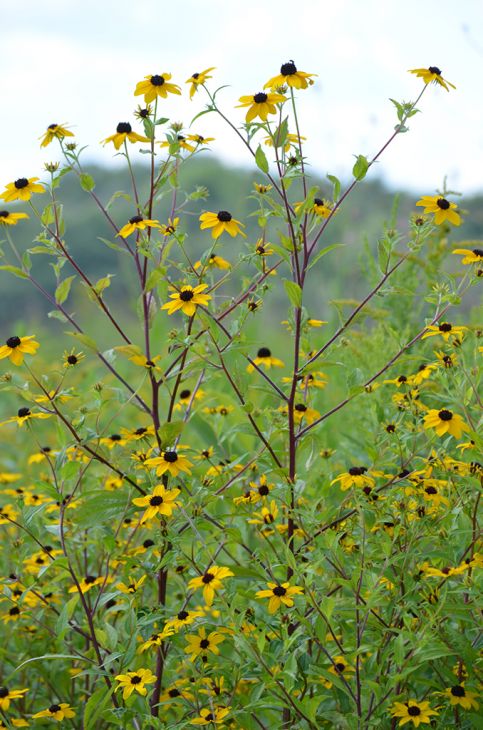

Don’t confuse Brown-eyed Susan with its more common cousin, Black-eyed Susan — this one is smaller-flowered, bushier, and blooms later, often carrying color from August into October. A single plant can produce dozens of blooms on a branching, three-to-four-foot mound, and it reseeds readily, so don’t be surprised to find volunteers nearby next year. Full sun is best.🔵
Did you know? This plant is listed as State Threatened in the wild?
Common Ironweed (Vernonia fasciculata)

Common Ironweed holds down the back of the border on height alone — four to six feet of sturdy stem topped with clusters of deep magenta-purple flowers in late summer. Butterflies, monarchs included, use it heavily as a nectar source through August and September. It prefers moist soil and full sun, and its bold vertical form makes a nice contrast against rounder, bushier neighbors.🔵
Great Blue Lobelia (Lobelia siphilitica)

True blue is rare in the plant world, and Great Blue Lobelia delivers it on upright spikes from August into September. It stays a manageable two to three feet tall and prefers moist soil in part sun to full sun, making it a natural pairing with Cardinal Flower in a damp bed or rain garden.🔵
Showy Goldenrod (Solidago speciosa)

Showy Goldenrod is the well-mannered member of the goldenrod family — clump-forming rather than running, so it stays where you put it. Dense, upright plumes of golden-yellow flowers appear in September and October, right when many other pollinator plants are winding down, and it tolerates average to dry soil once established. Expect two to four feet in height, in full sun.🔵
New England Aster (Symphyotrichum novae-angliae)

New England Aster is one of the latest bloomers on this list, often still going strong into October and sometimes right up to the first hard frost. Its purple-to-magenta flowers with bright yellow centers are a critical late nectar source for monarchs on their way south. It grows three to five feet tall in full sun with average to moist soil, and it’s not shy about height, so give it room toward the back of a bed.🔵
Butterfly Weed (Asclepias tuberosa)
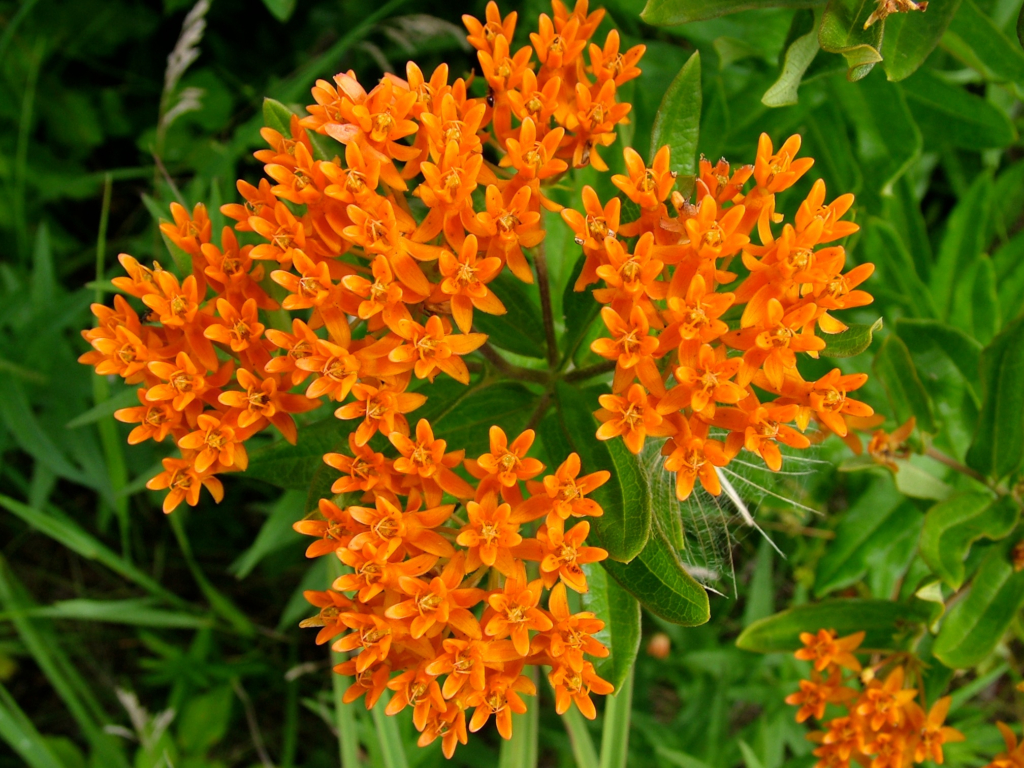
Butterfly Weed brings clusters of bright orange flowers over a low, tidy mound, blooming July into August. At one to two and a half feet tall, it tucks easily into the front of a border. As a milkweed, it’s the essential host plant for monarch caterpillars — the summer generations raised on it are what go on to make the fall migration. It wants full sun and well-drained, even dry soil, and develops a deep taproot, so give it a permanent spot from the start.🔵
Between the sun-lovers and the ones that want their feet wet, the front-of-border compact growers and the ones built for the back row, there’s a fit here for just about any yard looking to keep going past Labor Day. Stop in and walk the fall natives with us — we can help you match the right ones to your soil, your light, and how much room you’re willing to give something that spreads.
The Blue Dot🔵after a listing indicates it is a Minnesota Native Plant.
Read more about the categories of Native Plants we sell and learn more about the Blue Dot 🔵